IUI vs IVF: Understanding the Difference
When exploring fertility treatment options, you'll often hear about IUI (Intrauterine Insemination) and IVF (In Vitro Fertilization). While both aim to help couples conceive, they differ significantly in approach, complexity, and suitability. Understanding these differences can help you have informed discussions with your fertility specialist.
What is IUI (Intrauterine Insemination)?
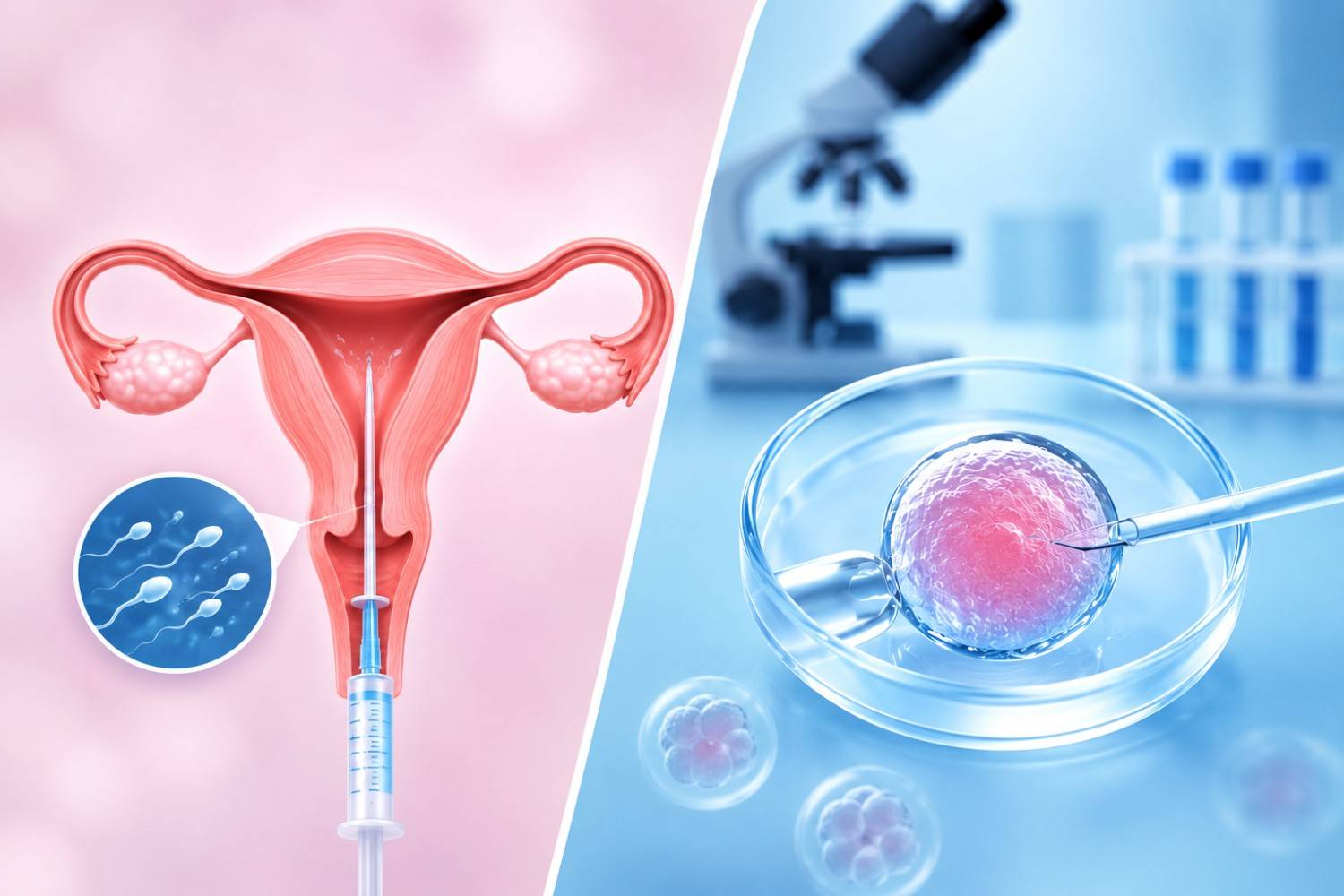
IUI is a relatively simple fertility procedure where specially prepared sperm is placed directly into the uterus around the time of ovulation. This reduces the distance sperm must travel to reach the egg, increasing the chances of fertilization. The procedure takes only a few minutes and is performed in the clinic.
What is IVF (In Vitro Fertilization)?
IVF is a more complex assisted reproductive technology where eggs are retrieved from the ovaries, fertilized with sperm in a laboratory, and the resulting embryo(s) are transferred to the uterus. The entire process takes about 2-3 weeks per cycle.
Key Differences Between IUI and IVF
The main distinction is where fertilization occurs: in IUI, fertilization happens naturally inside the body; in IVF, it occurs in a laboratory. This fundamental difference affects everything from cost to success rates to complexity.
When is IUI Recommended?
IUI may be suitable for couples with mild male factor infertility (slightly low sperm count or motility), unexplained infertility, cervical factor infertility, ovulation problems that respond to medication, and same-sex female couples or single women using donor sperm.
When is IVF Recommended?
IVF is typically recommended for blocked or damaged fallopian tubes, severe male factor infertility, failed IUI cycles (usually after 3-4 attempts), advanced maternal age (over 38), diminished ovarian reserve, severe endometriosis, and need for genetic testing of embryos.
Procedure Comparison
IUI involves minimal intervention: mild ovarian stimulation (optional), monitoring via ultrasound, sperm preparation, and a quick insemination procedure.
IVF requires more intensive steps: ovarian stimulation with daily injections, multiple monitoring appointments, egg retrieval under sedation, laboratory fertilization, embryo culture, and embryo transfer.
Success Rates
Success rates vary based on age and specific fertility issues. For IUI, success rates typically range from 10-20% per cycle for women under 35. For IVF, success rates are generally higher, ranging from 40-50% per cycle for women under 35. Your doctor will provide personalized estimates based on your situation.
Cost Comparison
IUI is significantly less expensive than IVF, making it an attractive first-line treatment for appropriate candidates. However, if multiple IUI cycles are needed, the cumulative cost and time investment should be considered. IVF, while more expensive per cycle, may be more cost-effective for some couples in the long run.
Physical and Emotional Considerations
IUI is less physically demanding with minimal discomfort and quick recovery. IVF requires more physical commitment, including daily injections and the egg retrieval procedure. Both treatments can be emotionally challenging, and support resources are important.
Making the Right Choice
The choice between IUI and IVF depends on the cause of infertility, age and ovarian reserve, previous treatment history, personal preferences and timeline, and financial considerations. There's no one-size-fits-all answer.
Dr. Sunita Arora's Approach
Dr. Sunita Arora believes in a step-wise approach to fertility treatment. After thorough evaluation, she discusses all options with patients, explaining the benefits and limitations of each. For many couples, starting with less invasive treatments like IUI before moving to IVF makes sense, though some situations warrant proceeding directly to IVF.
Take the First Step
If you're trying to conceive and considering fertility treatment, the first step is a comprehensive evaluation. Dr. Sunita Arora will assess your situation, explain your options clearly, and help you choose the most appropriate treatment path. Schedule a consultation to begin your journey toward parenthood.
Share Article | Book Consultation with Dr. Sunita
Dr. Sunita Arora
Fertility Specialist & Gynaecologist
With over 23 years of experience, Dr. Sunita Arora is a renowned fertility specialist and gynecologist practicing in Delhi NCR. She is dedicated to providing compassionate, patient-centered care.