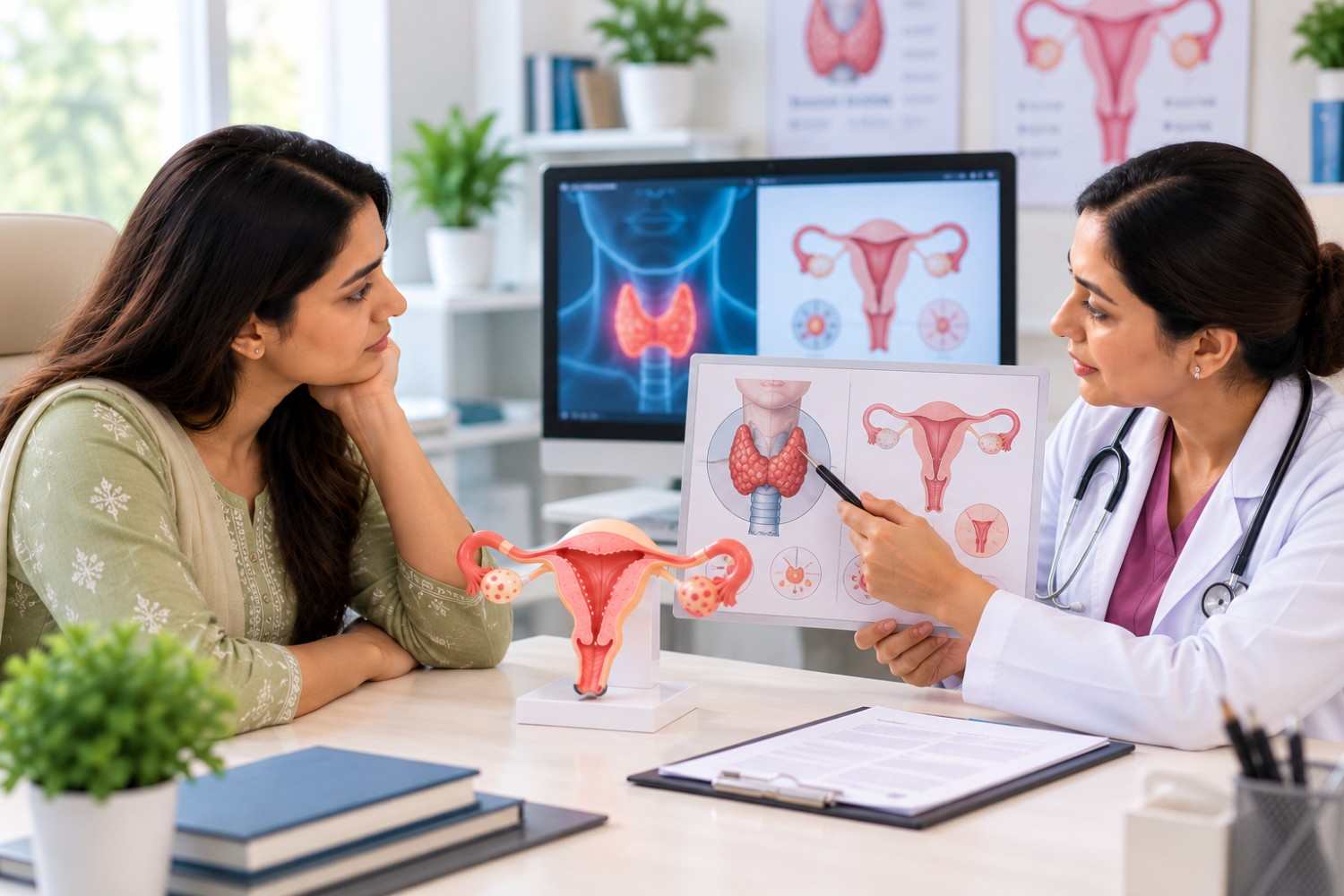
The thyroid is a small gland in the neck, but its hormones influence nearly every system in the body, including the menstrual cycle, ovulation, fertility and pregnancy. Thyroid problems are common in women, and they are often missed because the symptoms, such as tiredness, weight change or irregular periods, can be attributed to other causes. When a gynaecological problem does not settle with usual treatment, the thyroid is one of the first things worth checking.
This page explains how thyroid disorders can affect periods, fertility, pregnancy and menopause, how they are diagnosed, and how thyroid-related gynaecological problems are managed. It is general educational information. Thyroid treatment must always be individualised and monitored by a doctor, and should not be started, changed or stopped without medical advice.

Thyroid hormones work closely with the hormones of the brain and ovaries. When the thyroid is underactive (hypothyroidism) or overactive (hyperthyroidism), this balance is disturbed. This can alter the pattern of periods, interfere with ovulation, change the levels of other hormones such as prolactin, and affect the chances of conceiving and of carrying a pregnancy safely. The good news is that thyroid disorders are usually easy to detect with a blood test and, in most women, can be well controlled with treatment.
Here the thyroid produces too little hormone. The most common cause is an autoimmune condition called Hashimoto's thyroiditis. Symptoms can include tiredness, weight gain, constipation, dry skin, feeling cold, hair thinning, low mood and slowed thinking, but some women have few symptoms.
Here the thyroid makes too much hormone, most often because of an autoimmune condition such as Graves' disease. Symptoms can include weight loss, palpitations, anxiety, tremor, heat intolerance, sweating and loose stools.
In subclinical hypothyroidism, TSH is mildly raised while the thyroid hormone levels are still normal. It may cause few or no symptoms, yet it can matter for women who are trying to conceive or are pregnant, so the decision to treat is made individually.
Some women have thyroid antibodies even when their hormone levels are normal. This may increase the chance of developing thyroid problems later, including in the months after childbirth, a condition called postpartum thyroiditis.
How thyroid hormone imbalances impact menstrual cycles, ovulation, conception, pregnancy, and menopause.
Hypothyroidism may cause heavy, prolonged or irregular periods, while hyperthyroidism often causes lighter, less frequent or absent periods. Thyroid disease can also cause or worsen irregular ovulation. Please see our pages on irregular periods and heavy periods for more on these symptoms.
Untreated thyroid disorders can reduce the chance of ovulation and conception. Thyroid disease is also more common in women with PCOS and in those with unexplained infertility, which is why a thyroid test is a standard part of a fertility evaluation.
Underactive thyroid can raise prolactin levels, which in turn may disturb ovulation and cause irregular or absent periods, and sometimes milk discharge from the breasts.
Poorly controlled thyroid disease is associated with a higher risk of miscarriage, preterm birth, high blood pressure in pregnancy and other complications. In early pregnancy, the baby depends on the mother's thyroid hormone for brain development, which makes good control especially important.
Thyroid disorders become more common with age, and their symptoms, such as tiredness, mood changes, sleep disturbance and changes in periods, can resemble those of perimenopause. A thyroid test helps to distinguish the two.
Diagnosis is based on your symptoms, examination and blood tests.
TSH (thyroid-stimulating hormone) is the usual first test.
Free T4, and sometimes T3, show how much active hormone is in the blood.
Thyroid antibodies, such as anti-TPO, help to identify autoimmune thyroid disease.
A neck ultrasound or other tests may be advised if the thyroid is enlarged, has a nodule or if the cause is unclear.
Because the thyroid and reproductive hormones interact, your doctor may also check prolactin, other reproductive hormones, blood count and vitamin levels. Please see our page on hormonal assessment for more detail. Women who are pregnant or planning pregnancy are interpreted against pregnancy-appropriate reference ranges.
Individualised thyroid management tailored to your menstrual health, fertility plans, and pregnancy stage.
Hypothyroidism is treated with levothyroxine, a thyroid hormone tablet taken once daily, usually on an empty stomach, and kept apart from iron, calcium and some other supplements, as these can reduce absorption. The dose is adjusted according to blood tests, and treatment is usually long-term. Periods, ovulation and fertility often improve once thyroid levels are normalised, although this can take a few months.
Treatment may include antithyroid medicines, and in some cases radioactive iodine or surgery, chosen according to the cause, severity and your plans for pregnancy. Radioactive iodine and some medicines need special timing and precautions if you may become pregnant, so please tell your doctor early about any pregnancy plans.
If you are planning pregnancy, or about to start fertility treatment such as IUI or IVF, your thyroid levels should be checked and optimised first. Many guidelines aim for TSH in the lower part of the normal range before conception, and your doctor will set a target for you. If you already take thyroid medicine, please do not stop it and inform your doctor as soon as you plan or suspect pregnancy.
Thyroid requirements often increase early in pregnancy, so the dose of levothyroxine is commonly adjusted, and thyroid tests are repeated at regular intervals. In hyperthyroidism, the choice and dose of medicine are carefully reviewed for safety during pregnancy. Close coordination between the gynaecologist and, where needed, an endocrinologist helps to protect both mother and baby.
Thyroid function may be rechecked after delivery, particularly in women with a history of thyroid disease or antibodies, as thyroid problems can appear in the first year after childbirth. Long-term, regular testing helps to keep the dose right.
Many women with thyroid disease benefit from a team approach, in which the gynaecologist manages periods, fertility and pregnancy care, and an endocrinologist or physician helps with the thyroid itself, particularly for complex or severe disease.
Optimising thyroid health before conception and daily nutrition and medication habits to support hormonal balance.
Whether you are planning natural conception, starting IUI or IVF, or already pregnant, keeping thyroid hormone levels within pregnancy-specific targets is essential for healthy ovulation, reducing miscarriage risk, and supporting your baby's early brain development.
Important Note: If you already take thyroid medicine, please do not stop or change it on your own—inform your doctor as soon as you plan or suspect pregnancy so your dose can be safely adjusted.
Dr. Sunita Arora is an obstetrician, gynaecologist and fertility specialist with more than 23 years of experience. She holds an MBBS from Lady Hardinge Medical College, New Delhi, and an MD in Obstetrics and Gynaecology from UCMS and GTB Hospital, and she is a Fellow of the Indian College of Obstetricians and Gynaecologists (FICOG) and a Fellow of the International College of Surgeons (FICS). She completed a fellowship in Reproductive Medicine at D.Y. Patil University, Mumbai.
Her practice covers general gynaecology, pregnancy care and infertility, so thyroid issues are assessed in the context of your periods, fertility and pregnancy plans, and coordinated with an endocrinologist when needed. She consults at Safdarjung Enclave and is also associated with Fortis La Femme, Greater Kailash II, serving women across South Delhi, including Greater Kailash, Green Park, Hauz Khas and nearby areas.
Thyroid issues are assessed in the context of your periods, fertility and pregnancy plans, and coordinated with an endocrinologist when needed.
If you have irregular or heavy periods, difficulty conceiving, recurrent miscarriage, or a known thyroid condition and are planning pregnancy, a careful review can help you manage both together.
Dr Sunita Arora Fertility and Gynae Clinic
Fortis La Femme, South Delhi
Book an appointment with Dr. Sunita Arora, and bring any previous thyroid reports and medicine details.
Find answers to common questions about thyroid disorders, menstrual irregularities, TSH targets, fertility, and pregnancy care.
Medical disclaimer: This page is for general educational purposes and does not replace personalised medical advice, diagnosis or treatment. Please consult a qualified doctor about your own health. If you have severe abdominal pain, heavy bleeding, fainting or fever, seek urgent medical care.