Book Appointment

Laparoscopy (Diagnostic and Operative) in South Delhi

Laparoscopy Consultation - Dr Sunita Arora
Endoscopic Surgery & Gynaecology

Laparoscopy (Diagnostic and Operative): – Keyhole Surgery and Care in South Delhi

If you have been told you may need laparoscopy, it is natural to have questions about what the procedure involves, how safe it is and how long recovery will take. Laparoscopy, often called keyhole surgery, allows a gynaecologist to look inside the pelvis and, where needed, treat a problem through a few very small incisions instead of one large cut.

This page explains what laparoscopy is, when diagnostic and operative laparoscopy are used, what to expect before and after the procedure, and its benefits and risks. It is general educational information. Whether laparoscopy is right for you can only be decided after a personal clinical assessment.
What Is Laparoscopy?

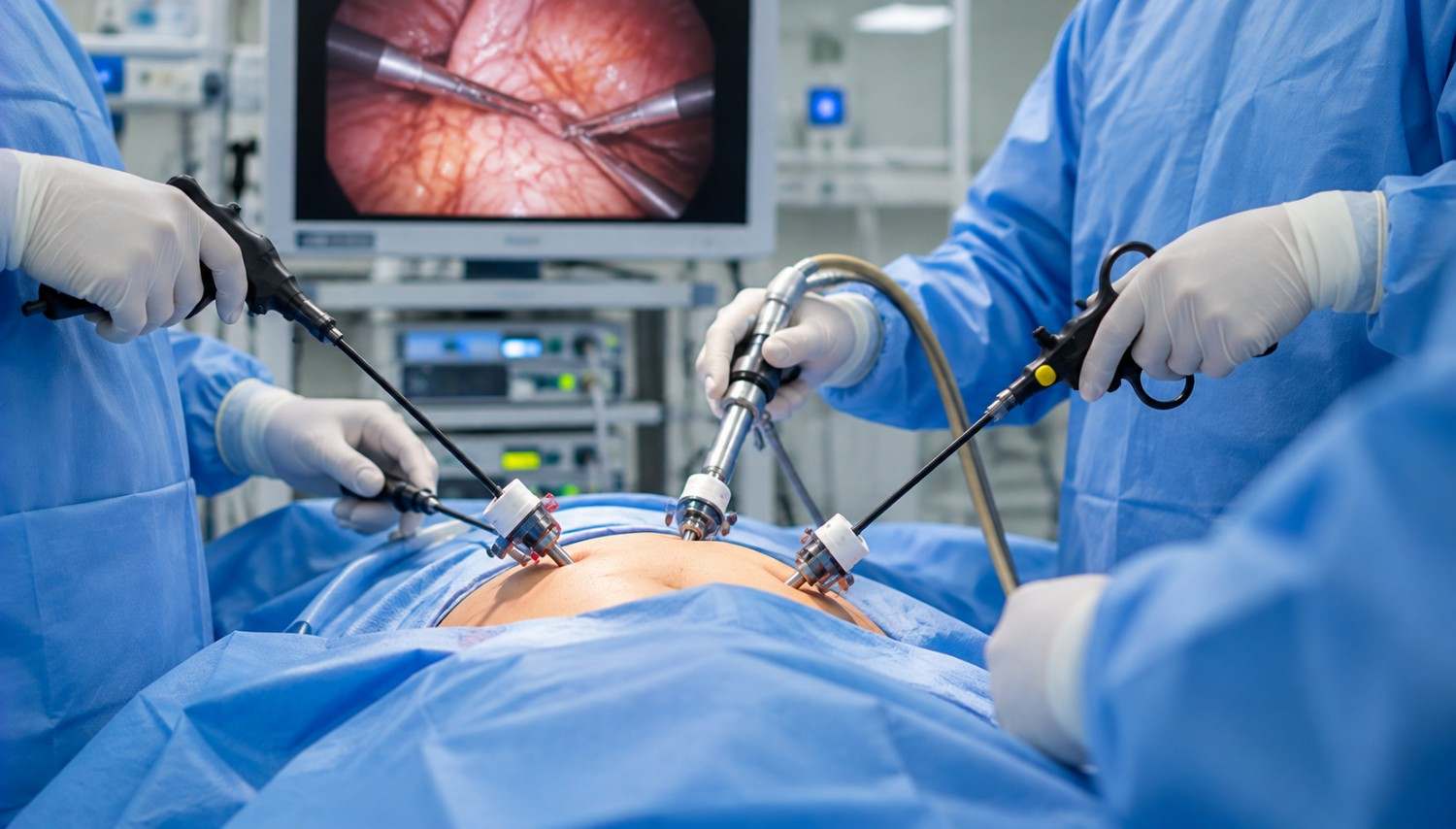
Laparoscopy is a minimally invasive surgical technique. A thin telescope with a light and camera, called a laparoscope, is passed into the abdomen through a small incision, usually near the navel. The abdomen is gently inflated with carbon dioxide gas to create space, and the images are shown on a screen so the surgeon can see the uterus, fallopian tubes, ovaries and surrounding structures clearly. Additional small incisions are used for fine instruments when treatment is needed.

The procedure is performed under anaesthesia, so you do not feel pain during it.

Diagnostic Laparoscopy

In diagnostic laparoscopy, the aim is to find the cause of a problem when scans and tests have not given a clear answer. It may be advised to:

Look for endometriosis, pelvic adhesions or pelvic infection as a cause of chronic pelvic pain.
Assess the fallopian tubes and pelvis during an infertility evaluation, often together with a dye test (chromopertubation) to check whether the tubes are open.
Examine ovarian or pelvic masses that need closer evaluation.
Investigate suspected ectopic pregnancy or other pelvic causes of acute pain in selected situations.
Clinical Note: Not every woman with infertility or pelvic pain needs laparoscopy. It is usually recommended when less invasive tests are inconclusive or when the findings are likely to change treatment.

Operative Laparoscopy

In operative laparoscopy, the problem is treated during the same procedure or in a planned surgery. Depending on your diagnosis, this may include:

Endometriosis Surgery

Endometriotic deposits and related adhesions may be removed or treated to relieve pain and, in selected women, to support fertility.

Ovarian Cystectomy

Ovarian cysts that are large, persistent, painful or suspicious can be removed while taking care to preserve healthy ovarian tissue, which is especially important for women who wish to conceive.

Myomectomy (Fibroid Removal)

Fibroids that cause heavy bleeding, pressure symptoms or fertility problems may be removed laparoscopically in suitable cases, depending on their size, number and position.

Adhesiolysis and Tubal Surgery

Scar tissue around the tubes and ovaries can be divided, and tubal conditions such as hydrosalpinx may need treatment. In some women, tubal problems are better managed with IVF, and this will be discussed honestly with you.

Ectopic Pregnancy Management

When appropriate, a pregnancy located in a fallopian tube can be treated surgically through keyhole access, preserving the tube when possible and safe.

Hysterectomy and Other Gynaecological Procedures

Laparoscopic hysterectomy and other procedures may be considered for selected conditions when other treatments are not suitable or have not worked.

Surgical Approach Note: Your surgeon will explain whether a laparoscopic approach is suitable. Occasionally, the procedure has to be converted to open surgery for safety, and this possibility will be discussed with you beforehand.

Benefits of Minimally Invasive Surgery

Compared with open surgery, laparoscopy generally offers the following advantages. The benefit for any individual depends on the diagnosis, the complexity of the surgery and overall health.

Benefit 01

Smaller Incisions

Smaller incisions and less visible scarring compared with traditional open surgery.

Benefit 02

Less Post-Operative Pain

Less post-operative pain and discomfort during the initial recovery phase.

Benefit 03

Shorter Hospital Stay

A shorter hospital stay, often performed as a day-care procedure or requiring only a one-night stay.

Benefit 04

Faster Recovery

A faster return to normal daily activities and routine life.

Benefit 05

Magnified Pelvic Views

Magnified, clear views of pelvic structures on a high-definition screen, which supports precise treatment.

Preparation, Recovery and Safety

Understanding how to prepare for laparoscopy, what recovery involves, and how the procedure relates to your overall health and fertility goals.

Preparing for Laparoscopy

Before the procedure, you will have a consultation, an examination and relevant tests such as blood work and ultrasound, and sometimes a pre-anaesthetic check-up. Your doctor will review your medicines, including blood thinners, and give clear instructions about fasting and what to bring. Tell your doctor about any previous surgeries, allergies or medical conditions, and about any possibility of pregnancy.

What to Expect After Laparoscopy

Most women go home the same day or after one night. Mild pain at the incision sites, bloating and shoulder-tip discomfort from the gas are common and usually settle within a few days. Light activity is usually encouraged early, and the timing of return to work, exercise and intercourse depends on the type of surgery and will be advised individually.

When to seek care: Contact your doctor promptly, or seek urgent care, if you develop fever, severe or worsening abdominal pain, heavy bleeding, repeated vomiting, redness or discharge at a wound, or difficulty passing urine.

Surgical Safety

Risks and Safety

Laparoscopy is widely performed and is generally safe in experienced hands, but no surgery is without risk. Possible complications include bleeding, infection, injury to the bowel, bladder or blood vessels, anaesthesia-related problems, and, rarely, the need to convert to open surgery. Your surgeon will explain the risks relevant to your procedure and obtain your informed consent.

Choosing the right case for surgery, careful technique and good post-operative follow-up all help reduce risk.
Fertility Care

Laparoscopy and Fertility

When laparoscopy is used in an infertility work-up or to treat conditions such as endometriosis, fibroids or adhesions, the goal is to improve the pelvic environment. It does not guarantee pregnancy.

Your doctor will advise on the best timing to try to conceive afterwards, and whether IUI or IVF should be considered based on your age, ovarian reserve, tubal status and your partner's evaluation.

Specialist Expertise

Consult Dr. Sunita Arora for Laparoscopic Care in South Delhi

Dr. Sunita Arora is an obstetrician, gynaecologist and laparoscopic surgeon with more than 23 years of experience. She holds an MBBS from Lady Hardinge Medical College, New Delhi, and an MD in Obstetrics and Gynaecology from UCMS and GTB Hospital, and she is a Fellow of the Indian College of Obstetricians and Gynaecologists (FICOG) and a Fellow of the International College of Surgeons (FICS). She also completed a fellowship in Reproductive Medicine at D.Y. Patil University, Mumbai.

Her special interests include endoscopic surgery, infertility, IUI and IVF, and patients are guided through each step of evaluation and treatment in clear, plain language.

If you have pelvic pain, an ovarian cyst, fibroids, endometriosis or difficulty conceiving, and laparoscopy has been suggested, an unhurried consultation can help you understand your options.

Clinic Locations

Book a Consultation

She consults at Safdarjung Enclave and is also associated with Fortis La Femme, Greater Kailash II, serving women across South Delhi, including Greater Kailash, Green Park, Hauz Khas and nearby areas.

01
Safdarjung Enclave

Dr Sunita Arora Fertility and Gynae Clinic

02
Greater Kailash II

Fortis La Femme, South Delhi

Book an appointment with Dr. Sunita Arora to review your reports and plan the next steps.

Frequently Asked Questions

Find answers to common questions about diagnostic and operative laparoscopy, recovery, and safety.

Laparoscopy uses small incisions, but it is still a surgical procedure performed under general anaesthesia. Diagnostic laparoscopy is usually brief, while operative procedures vary in complexity. Your surgeon will explain what is involved in your case.

A diagnostic laparoscopy is often relatively short, whereas operative procedures such as endometriosis surgery or myomectomy take longer, depending on the findings and the work required.

Many women resume light activity within a few days, but recovery depends on the procedure. Simple diagnostic procedures usually need less recovery time than extensive operative surgery. Your doctor will give personalised advice.

The incisions are small, typically a few millimetres to about a centimetre, and usually fade over time, although healing varies from person to person.

It can help when a treatable problem, such as adhesions, endometriosis, fibroids or certain tubal conditions, is found and corrected. It does not guarantee pregnancy, and in some cases IVF may be the better option.

Call promptly if you have fever, worsening pain, heavy bleeding, persistent vomiting, wound redness or discharge, or difficulty passing urine.