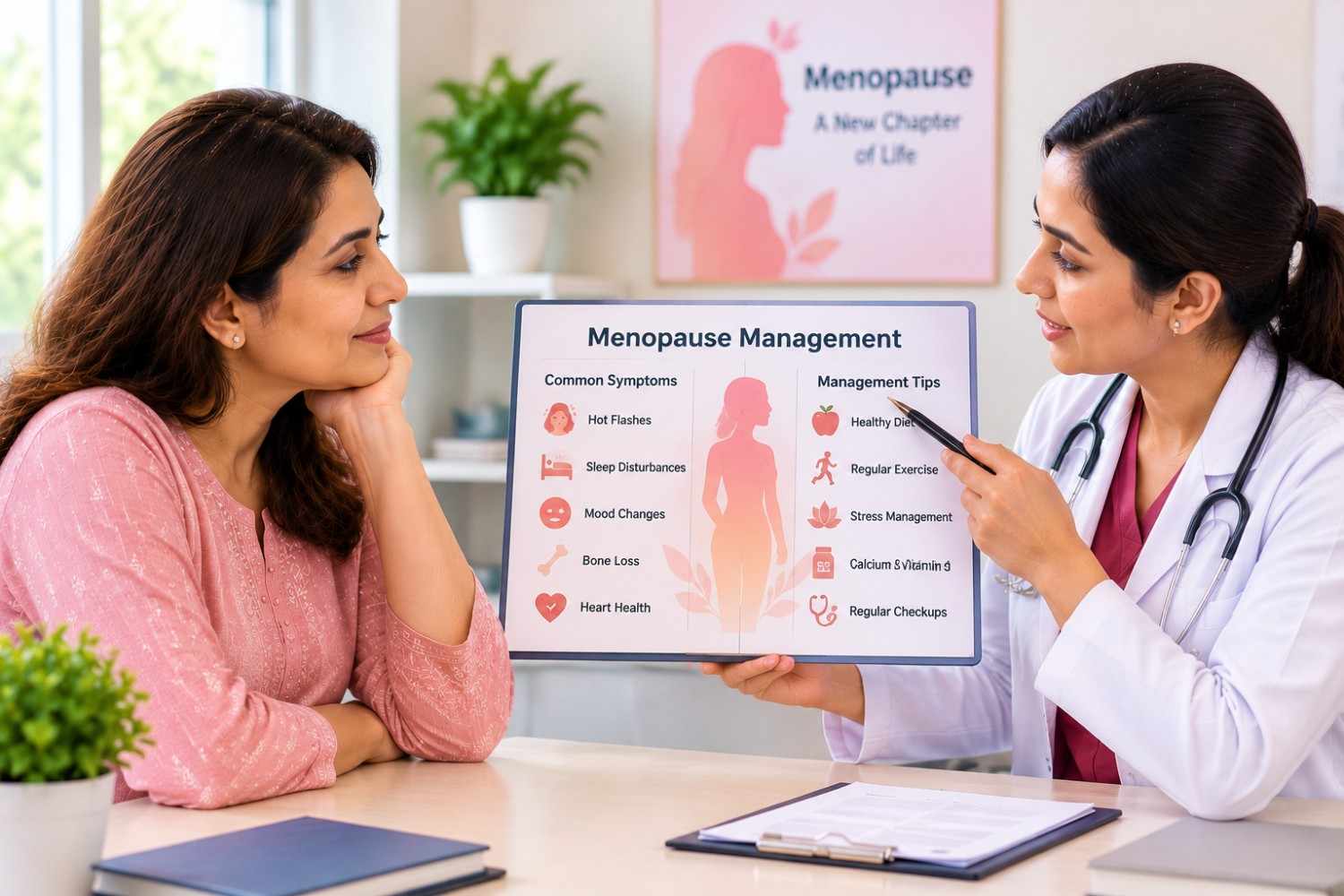
Menopause is a natural stage of life, not a disease. Even so, the years around it can be difficult. Hot flushes, disturbed sleep, mood changes, vaginal dryness and irregular periods can affect work, relationships and quality of life, and many women suffer for years without seeking help, assuming that nothing can be done. In fact, there are effective options, and the right care can make this transition far more comfortable.
This page explains what happens during perimenopause and menopause, the common symptoms, how a gynaecologist evaluates them, and the treatment options, including menopausal hormone therapy, non-hormonal approaches, and long-term health protection. It is general educational information. Your own plan can only be made after a personal consultation.
Menopause is defined as the point when a woman has had no periods for 12 months, and it reflects the end of ovarian egg release and the fall in oestrogen production. It usually occurs somewhere in the late 40s to early 50s. The years leading up to it, called perimenopause, can last several years, during which hormone levels fluctuate and periods become irregular. The years after menopause are called postmenopause.
Early menopause: menopause occurring before the age of 45.
Premature ovarian insufficiency: loss of normal ovarian function before the age of 40. This needs specific evaluation and care.
Surgical menopause: menopause that follows the surgical removal of both ovaries, which causes a sudden drop in hormones and often more intense symptoms.
The fall in oestrogen has effects beyond symptoms. It speeds up bone loss, increasing the risk of osteoporosis and fractures, and it is associated with a rise in the risk of heart disease, high cholesterol and high blood pressure. The genital and urinary tissues may thin and become drier over time, a condition called genitourinary syndrome of menopause. Planning for these long-term risks is an important part of menopause care, not only symptom relief.
Symptoms vary a great deal between women. Some have very few, while others find them disabling. Common symptoms include:
Many of these symptoms can also be caused by other conditions, such as thyroid disorders, anaemia or depression, so a proper evaluation is important and symptoms should not be put down to menopause automatically.
There is no one-size-fits-all treatment. The best plan is chosen according to your symptoms, age, medical history, preferences and risks.
Regular exercise, including weight-bearing and strength exercises, a balanced diet with enough calcium and protein, adequate vitamin D, maintaining a healthy weight, not smoking and limiting alcohol and caffeine can ease symptoms and protect bones and the heart. Dressing in layers, keeping the bedroom cool and having a regular sleep routine help with hot flushes and sleep.
For vaginal dryness, discomfort, pain during intercourse and urinary symptoms, low-dose vaginal oestrogen acts locally and is often suitable even for women who cannot use systemic hormone therapy, subject to medical advice. Non-hormonal vaginal moisturisers and lubricants can also help.
Menopausal hormone therapy replaces some of the hormones that the ovaries no longer make, and it is the most effective treatment for hot flushes, night sweats and vaginal symptoms. It is also effective in preventing bone loss. Women who still have a uterus need a progestogen along with oestrogen, to protect the lining of the uterus, while women who have had a hysterectomy can usually take oestrogen alone. It is available as tablets, patches, gels and other forms, and the dose and route are chosen individually.
MHT is generally considered most suitable for healthy women who are under 60 or within ten years of menopause and have troublesome symptoms. Like any medicine, it has risks, which depend on age, the type and duration of treatment and personal health history. These can include a small increase in the risk of blood clots with oral oestrogen and a small increase in breast cancer risk with long-term combined therapy. It is not suitable for women with certain conditions, such as a history of breast cancer, unexplained vaginal bleeding, active clotting disorders or serious liver disease. A balanced discussion of benefits and risks, with regular review, is the basis of safe use. It should not be started or stopped without medical advice.
For women who cannot or prefer not to take hormones, certain non-hormonal medicines can reduce hot flushes, and newer non-hormonal options are available in some countries. These have their own side effects and are prescribed after discussion. Cognitive behavioural therapy and other psychological approaches can help with hot flushes, sleep, mood and stress.
Many herbal remedies, supplements and compounded 'bioidentical' hormone products are promoted for menopause. Evidence for most is limited, quality varies and some may interact with other medicines or carry risks. Please discuss any product with your doctor before using it.
Bone density testing, calcium and vitamin D, exercise and, when osteoporosis or high fracture risk is found, bone-protective medicines can prevent fractures. Blood pressure, cholesterol and blood sugar are monitored and treated as needed.
Mood changes, anxiety and low desire are common and treatable. Counselling, support and, when appropriate, medical treatment can help, and talking to your partner about changes in intimacy is often valuable. If you feel persistently low or hopeless, please tell your doctor.
A comprehensive evaluation focuses on your symptoms, menstrual pattern, overall health, and long-term preventive screening.
In women over 45 with typical symptoms, menopause is usually diagnosed from the symptoms and the pattern of periods, without the need for hormone tests. Your doctor will ask about your periods, symptoms, general health, family history, past surgeries and medicines, and your preferences about treatment.
Tests are used selectively. Blood tests such as thyroid function, blood count and, in younger women, FSH and other hormones may be done to exclude other causes or to confirm early menopause. A pelvic ultrasound and, if needed, a sample from the uterine lining may be advised for abnormal or heavy bleeding.
Depending on your age and risk factors, your doctor may check blood pressure, weight, blood sugar and cholesterol, and may recommend a bone density scan (DEXA), screening for cervical cancer and breast screening with a mammogram, as appropriate.
Important considerations regarding bleeding, contraception, early menopause, and signs that require prompt medical evaluation.
Pregnancy is less likely but still possible in perimenopause, so contraception is advised until menopause is confirmed, and your doctor can advise how long to continue it. Irregular or heavy bleeding in this phase should be evaluated rather than assumed to be normal, since conditions such as fibroids, polyps and thickening of the uterine lining can occur. Please see our pages on heavy periods and irregular periods.
Premature and Early Menopause: Women who go through menopause before 40, or before 45, face a longer period of oestrogen deficiency and a higher risk of bone and heart problems. Hormone therapy is usually recommended for these women until about the typical age of menopause unless there are reasons not to, and fertility counselling is an important part of care. If you are younger and have stopped having periods, please seek evaluation early. See also our pages on hormonal assessment and thyroid disorders.
Please consult a gynaecologist if your symptoms are affecting your daily life, sleep or relationships, if you are under 45 and your periods are becoming irregular or have stopped, or if you want advice on prevention of bone and heart disease. See a doctor promptly if you have:
Dr. Sunita Arora is an obstetrician, gynaecologist and laparoscopic surgeon with more than 23 years of experience. She holds an MBBS from Lady Hardinge Medical College, New Delhi, and an MD in Obstetrics and Gynaecology from UCMS and GTB Hospital, and she is a Fellow of the Indian College of Obstetricians and Gynaecologists (FICOG) and a Fellow of the International College of Surgeons (FICS). She completed a fellowship in Reproductive Medicine at D.Y. Patil University, Mumbai.
Her practice covers general gynaecology, with care planned around your symptoms, health history and preferences, and with referral to other specialists when needed.
If menopausal symptoms are affecting your sleep, mood, comfort or health, or you want advice on protecting your bones and heart, a thorough, unhurried consultation can help.
She consults at Safdarjung Enclave and is also associated with Fortis La Femme, Greater Kailash II, serving women across South Delhi, including Greater Kailash, Green Park, Hauz Khas and nearby areas.
Dr Sunita Arora Fertility and Gynae Clinic
Fortis La Femme, South Delhi
Book an appointment with Dr. Sunita Arora, and bring any previous reports and a list of your current medicines.
Find answers to common questions about perimenopause, menopause symptoms, hormone replacement therapy, and long-term women's health.
Medical disclaimer: This page is for general educational purposes and does not replace personalised medical advice, diagnosis or treatment. Please consult a qualified doctor about your own health. If you have severe abdominal pain, heavy bleeding, fainting or fever, seek urgent medical care.