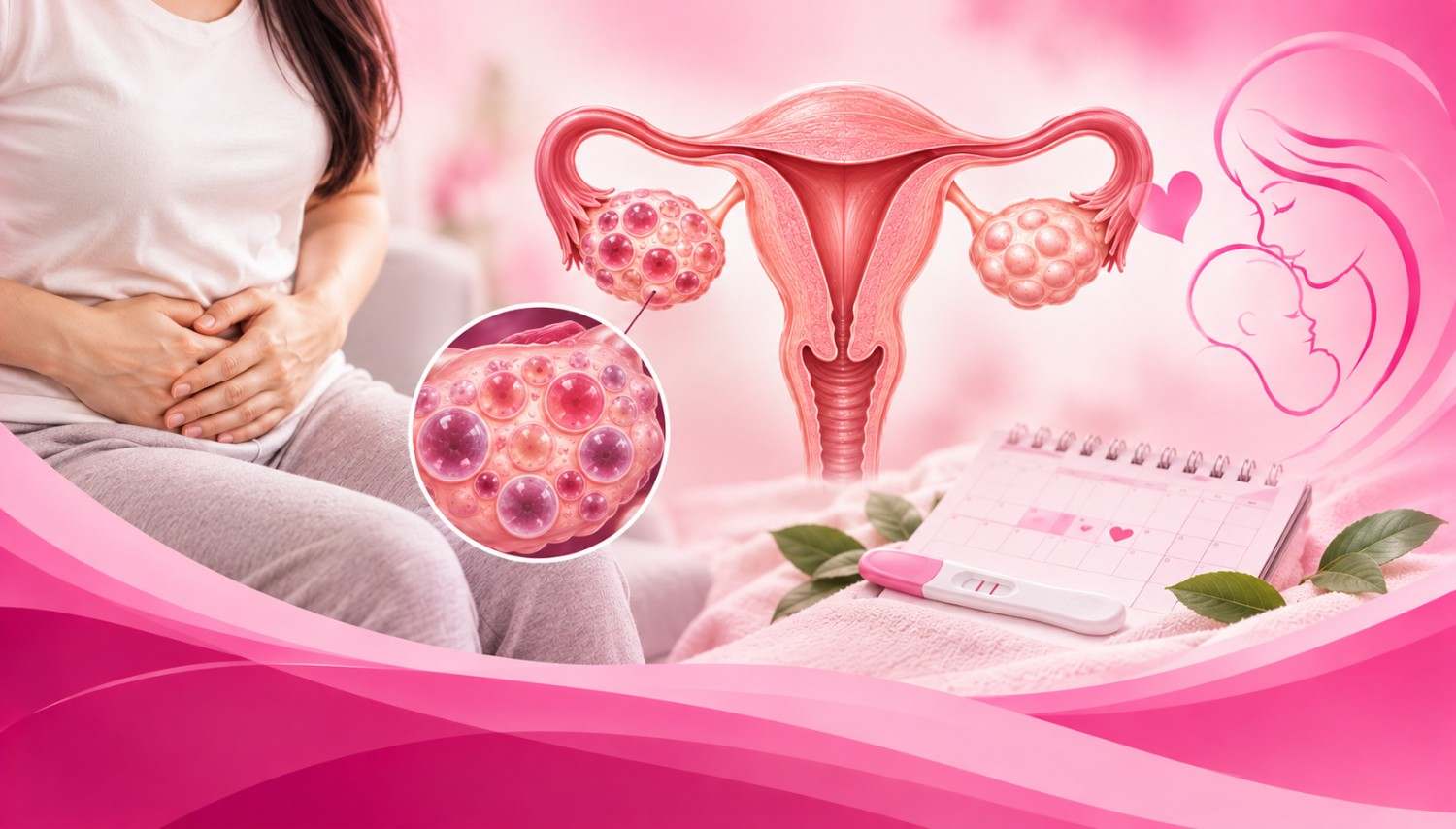
Irregular periods, stubborn weight gain, acne, unwanted hair growth and difficulty conceiving can feel like separate problems. For many women they share one cause: polycystic ovary syndrome. Hearing the diagnosis can be unsettling, but PCOS is common, manageable and, with the right plan, many of its symptoms can be improved considerably.
This page explains what PCOD and PCOS are, their symptoms and causes, how the condition is diagnosed, how weight gain and hormonal issues are managed, and how PCOS relates to fertility and long-term health. It is general educational information. Your own plan can only be made after a personal consultation.
The terms PCOD (polycystic ovarian disease) and PCOS (polycystic ovary syndrome) are often used interchangeably, and many patients hear both. In medical practice, PCOS is the recognised term, because the condition is a syndrome, a combination of features, rather than a simple disease of the ovaries. Despite the name, PCOS does not mean that a woman has true cysts that need to be removed. The small follicles seen on ultrasound are immature follicles that have not matured and released an egg.
The exact cause is not fully understood. Several factors appear to work together: genetic predisposition, higher levels of male-type hormones (androgens), and insulin resistance, in which the body needs more insulin than normal to control blood sugar. High insulin levels can stimulate the ovaries to produce more androgens, which disturbs ovulation, and can also encourage weight gain. Lifestyle and environment can influence how strongly the condition shows itself, but PCOS is not caused by anything a woman did wrong.
Symptoms vary widely, and not every woman has all of them. Common features include:
There is no one-size-fits-all cure for PCOS, but symptoms can be controlled and long-term risks reduced. Treatment is tailored to what matters most to you, whether that is regular periods, skin and hair concerns, weight, or pregnancy.
Healthy eating, regular physical activity, sufficient sleep and stress management are the first-line treatment for most women with PCOS, particularly those who are overweight. Even a modest loss of weight can improve insulin resistance, restore more regular ovulation and ease symptoms. A balanced diet rich in vegetables, pulses, whole grains and protein, with controlled portions of refined carbohydrates and sugary foods, is generally recommended, along with regular exercise combining aerobic activity and strength training. Crash diets and extreme restriction are not advised, and the plan should be sustainable and individualised.
PCOS can make weight gain easier and weight loss harder, which is frustrating, and it is not a sign of lack of effort. Your doctor can help set realistic goals, suggest a dietitian where useful, and check for related problems such as thyroid disease. In selected women with obesity, additional medical or other weight-management options may be discussed, with their benefits and risks.
For women who are not trying to conceive, hormonal medicines may be used to regulate periods and protect the uterine lining, because long periods without bleeding can lead to thickening of the lining. The choice of medicine depends on your health, age and preferences.
Medicines that lower or block the effect of androgens, skin-care treatments and cosmetic methods of hair removal may be combined, often with the help of a dermatologist. These treatments take months to show their full effect, and some are not safe in pregnancy, so effective contraception is advised while taking them.
Metformin or other medicines may be prescribed in selected women, particularly those with insulin resistance or raised blood sugar. Regular screening for diabetes, cholesterol and blood pressure is important, because PCOS increases the long-term risk of metabolic problems.
PCOS is associated with a higher rate of anxiety, low mood and body-image concerns. If you feel low, anxious or overwhelmed, please tell your doctor. Support and counselling are a legitimate part of treatment.
There is no single test for PCOS. Diagnosis is based on the combination of findings, after other conditions that can mimic it have been excluded.
International guidelines generally require two of the following three features:
Your doctor will ask about your cycles, weight changes, hair growth, acne, family history and symptoms of mood or sleep problems. Weight, waist measurement, blood pressure and signs of excess hair or skin changes are recorded.
Depending on your symptoms, tests may include androgens, thyroid function, prolactin, other reproductive hormones, blood sugar and a glucose tolerance test, and a lipid profile. Some tests are done to rule out other conditions, such as thyroid disease or raised prolactin.
An ultrasound examines the ovaries and the uterine lining. It also helps to check for other conditions that can cause similar symptoms.
Supporting your reproductive goals today while safeguarding your metabolic and gynaecological health for the future.
PCOS is one of the most common causes of ovulation problems, but most women with PCOS can become pregnant, sometimes with treatment. If you want to conceive, the plan usually starts with lifestyle measures and checks of the tubes, the uterus and the partner's semen. Ovulation-inducing medicines, with ultrasound monitoring, are commonly used, and letrozole is a widely used first choice in current guidelines. Other options include clomiphene, injectable hormones, and, in selected cases, laparoscopic ovarian drilling. IUI or IVF may be advised if other factors are present or if simpler treatment has not worked. Women with PCOS have a higher risk of too many follicles responding to stimulation, so monitoring is essential. Please see our pages on ovulation study and monitoring and female infertility for more detail.
Antenatal Care Note: PCOS also carries a higher risk of certain pregnancy complications, such as gestational diabetes and high blood pressure, so early and regular antenatal care is recommended.
PCOS is a long-term condition, and care does not end once symptoms are controlled. Women with PCOS have a higher risk of type 2 diabetes, high cholesterol, high blood pressure, sleep apnoea and, when periods are very infrequent, thickening of the uterine lining.
Preventive Monitoring: Regular check-ups, a healthy lifestyle, and attention to cycles and bleeding patterns help to reduce these risks. Please consult your doctor if you have prolonged gaps between periods or unusual bleeding.
Dr. Sunita Arora is an obstetrician, gynaecologist and fertility specialist with more than 23 years of experience. She holds an MBBS from Lady Hardinge Medical College, New Delhi, and an MD in Obstetrics and Gynaecology from UCMS and GTB Hospital, and she is a Fellow of the Indian College of Obstetricians and Gynaecologists (FICOG) and a Fellow of the International College of Surgeons (FICS). She completed a fellowship in Reproductive Medicine at D.Y. Patil University, Mumbai, and received IVF training at RMA, Mount Sinai, New York.
Her practice covers general gynaecology, infertility, IUI and IVF, and patients are guided through each step in clear, plain language, with treatment adapted to their goals, whether that is regular periods or pregnancy.
If you have irregular periods, weight gain, acne, excess hair or difficulty conceiving, and you suspect PCOD or PCOS, a structured evaluation can bring clarity and a clear plan.
She consults at Safdarjung Enclave and is also associated with Fortis La Femme, Greater Kailash II, serving women across South Delhi, including Greater Kailash, Green Park, Hauz Khas and nearby areas.
Dr Sunita Arora Fertility and Gynae Clinic
Fortis La Femme, South Delhi
Book an appointment with Dr. Sunita Arora, and bring any previous blood reports and scans.
Find answers to common questions about PCOD and PCOS, weight management, diet, fertility, and long-term care.
Medical disclaimer: This page is for general educational purposes and does not replace personalised medical advice, diagnosis or treatment. Please consult a qualified doctor about your own health. If you have severe abdominal pain, heavy bleeding, fainting or fever, seek urgent medical care.